Community Siren – Our Initiative for Safe Communities
The Community Siren system is a technology that instantly alerts neighbors in emergency situations. Help from neighbors can be obtained before police arrive in cases of theft, looting, fire, accidents, or domestic violence.
Neighbors are our first support in times of crisis
"
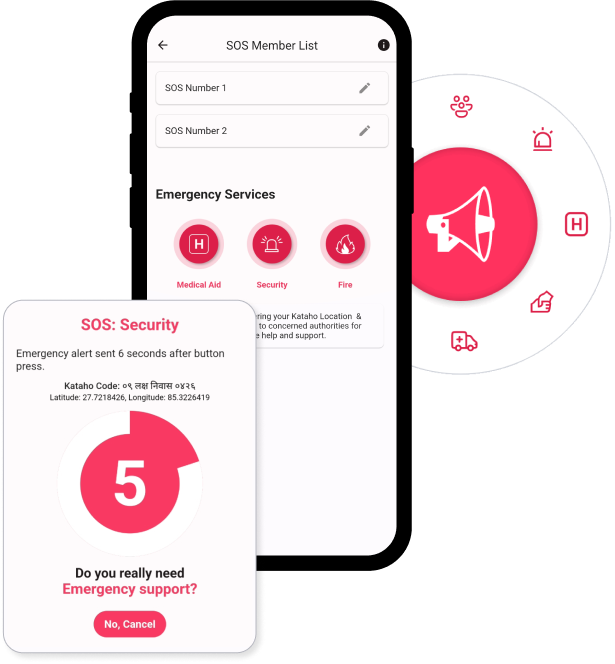
We have developed the first patented, wireless security system in Nepal at the community level.
Building Safe, United and Sustainable Communities
How Does This System Work?
1
Groups of 20-30 houses are formed in the community.
2
House numbers, names and contact details are registered.
3
In emergencies, members can activate the community siren directly from their mobile.
4
When the siren sounds, everyone receives app notifications + SMS/call alerts.
5
Police or relevant authorities can be informed immediately.
A contact person (chairperson) must be appointed in the community.
Why is it Necessary?
Immediate help from neighbors, quick information through siren/app/SMS/call, and mutual trust strengthen unity and security in the community.
Main Features of Community Siren
1
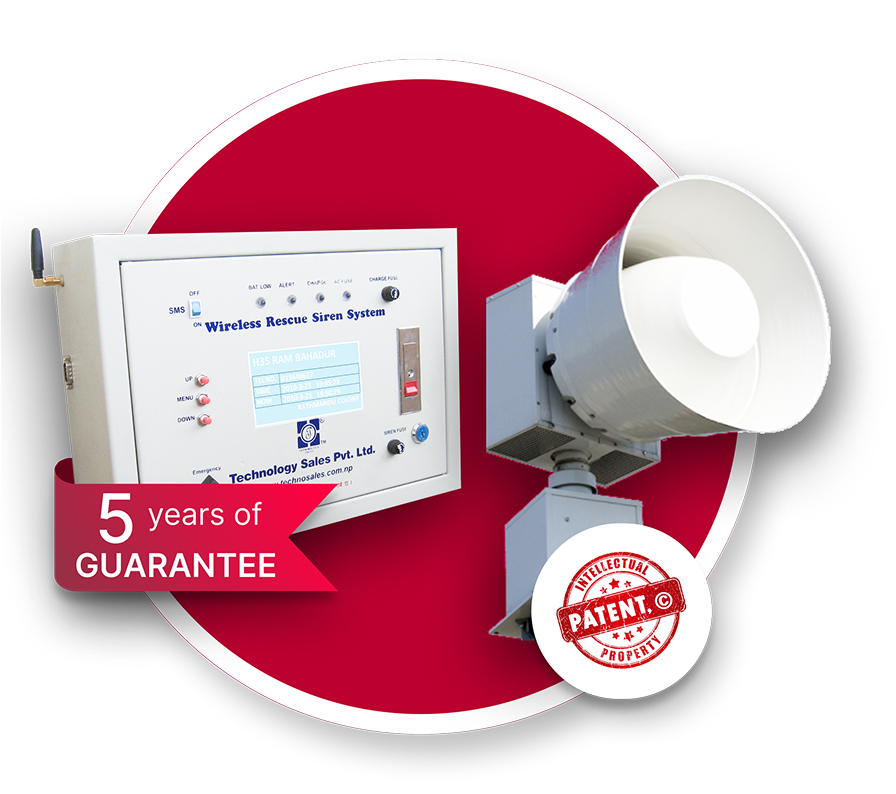
Fully wireless system
2
Advanced technology that can be used from landline, regular mobile or smartphone
3
Capacity to connect 20-40 houses
4
5 years Replacement Guarantee
5
Community meetings or information can be sent to group members at once
Success Stories
1
Building safe neighborhoods by reducing crime and drug use
2
Used to save lives in fires, accidents, domestic violence
3
Conducting health camps and blood donation programs
4
Information about water supply timing through siren
5
Communities that have created greenery, cleanliness and Free Wi-Fi Zone
Community Siren is Mandatory in Current Situation
The ongoing protests and vandalism across the country have created an environment of fear and insecurity for the general public. In such situations, the community siren helps inform neighbors immediately, call for help, and strengthen collective security. It can ensure security and assistance at the local level before police arrive in emergencies.

1
Communities were able to help at their own level in emergency situations.
2
Communities were able to help at their own level in emergency situations.
3
Nepal's patented technology with long experience and international recognition was proven.



Frequently Asked Questions.
Here you’ll find answers to the most common questions about our services, features, and benefits. If you have additional questions, feel free to reach out to us anytime.
Ready to get started
Addressing the House Own-self
Questions? Call at +977-1-4516900
